
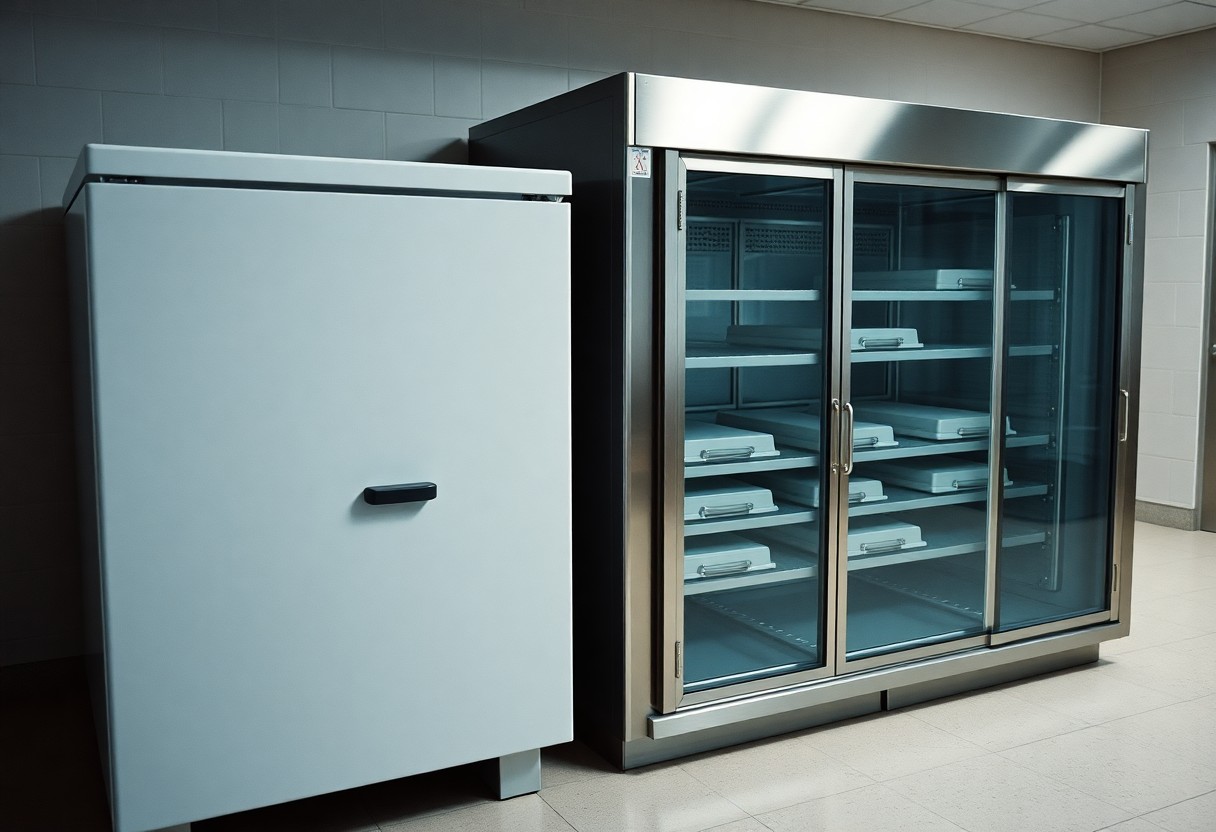
You may find yourself wondering about the distinctions between a freezer box and mortuary cold storage when it comes to preserving perishable items or deceased bodies. While both serve the purpose of maintaining low temperatures, their applications and design features differ significantly. Understanding these differences can help you make informed decisions regarding storage solutions, whether for food preservation or for the respectful handling of the deceased. In this post, we’ll explore how these two systems operate and the specific roles they play in their respective contexts.
Defining Cold Environments: Freezer Boxes vs. Mortuary Cold Storage
Specifications of Freezer Boxes
Freezer boxes are designed primarily for preserving food items or other perishable goods. These units typically maintain temperatures well below freezing, often reaching around -18°C (0°F) to ensure the longevity of stored materials. You might find freezer boxes with varying capacities, typically ranging from small domestic models holding a few cubic feet to larger commercial units designed to accommodate heavy workloads. The insulation material used in these boxes is critical, often featuring thick, high-density foam to minimize heat transfer and energy consumption.
The energy efficiency of freezer boxes also plays a significant role in their performance. Many modern units feature advanced technology such as automatic defrosting, and energy-efficient compressors that can help you save on electricity costs. Additionally, commercial models may come with specialized shelving options for easy organization and access, making it straightforward to store and retrieve items according to your needs.
Features of Mortuary Cold Storage Units
Mortuary cold storage units incorporate specific features designed for the sensitive context in which they operate. These units need to maintain a temperature range of 0°C to 4°C (32°F to 39°F), ensuring that deceased bodies are preserved in a respectful manner while minimizing decomposition. Equipped with robust digital temperature controls and monitoring systems, these units offer alarms that alert staff to any temperature deviations, enhancing safety and compliance with health regulations.
Unlike standard freezer boxes, mortuary cold storage units often feature slide-out trays or shelves to facilitate easy handling of remains. These compartments are constructed from smooth, easy-to-clean materials to maintain hygiene and allow for easy access during preparation for burial or cremation. Enhanced ventilation systems are another characteristic that aids in the management of odor and air quality within the storage environment.
Further enhancing their functionality, many mortuary cold storage units include customizable configurations to cater to the specific needs of funeral homes or medical facilities. Some models offer options for different sizes and layouts, accommodating everything from single bodies to multiple remains simultaneously. Additionally, energy-efficient designs ensure they operate quietly and remain cost-effective, making them suited for long-term use in sensitive settings.
Intended Use and Applications
Purpose of Freezer Boxes in Commercial Settings
Freezer boxes serve a fundamental role in various commercial environments such as restaurants, supermarkets, and food distribution centers. They are designed to maintain a temperature below 0°F (-18°C), ensuring that food products, pharmaceuticals, and other perishable items remain frozen for extended periods. For instance, a restaurant might use freezer boxes to store seafood, meats, and desserts, preserving their quality and safety until ready for service. The convenience of accessing regularly stocked items makes these units important for maintaining efficiency in busy kitchens.
Additionally, freezer boxes often feature adjustable shelving and customizable configurations, allowing you to optimize space based on inventory needs. This adaptability promotes swift organization, facilitating quick access to various products. With energy-efficient models now available, they contribute to cost savings in operational budgets while minimizing environmental impact.
Function of Mortuary Cold Storage in Funeral Services
Mortuary cold storage units are specifically engineered for the respectful preservation of deceased bodies prior to burial or cremation. Operating at temperatures between 36°F to 40°F (2°C to 4°C), these facilities prevent natural decomposition and maintain the body’s integrity for viewing and memorial ceremonies. For instance, a funeral home might utilize these systems to accommodate multiple cases during busy periods, ensuring that every individual is treated with dignity and care.
Functionality extends beyond mere preservation, as mortuary cold storage often includes features such as adjustable humidity controls, which further safeguard the condition of the body. The design typically promotes an organized environment, with individual compartments that allow for easy identification and retrieval. This ensures that funeral directors can efficiently manage their services and attend to grieving families with the utmost professionalism.
Temperature Regulation: A Comparative Look
For both freezer boxes and mortuary cold storage systems, maintaining the right temperature is non-negotiable to ensure the integrity of the items being preserved. Understanding the specific temperature requirements for each storage type sheds light on their very different purposes.
Optimal Temperature Ranges for Freezer Boxes
| Freezer Type | Optimal Temperature (°F) |
|---|---|
| Standard Freezer | 0°F (−18°C) |
| Deep Freezer | -10°F (−23°C) to -20°F (−29°C) |
| Commercial Freezer | 0°F (−18°C) or lower |
Optimal maintenance of freezer boxes involves temperatures around 0°F (-18°C) for standard models, which is effective for prolonged food preservation while minimizing the growth of bacteria and spoilage. Deep freezers often operate at even lower temperatures, typically achieving -10°F (-23°C) to -20°F (-29°C), making them ideal for long-term storage of meats and delicate perishables. Meanwhile, commercial freezers are designed to operate at similar or even lower temperatures, tailored to high-volume needs.
In residential settings, maintaining these temperature standards ensures your food remains safe for consumption and retains its quality. Regular checks and, if necessary, recalibrations of the thermostat can help in sustaining operational excellence.
Required Temperature Conditions in Mortuary Cold Storage
Mortuary Storage Temperature Criteria
| Storage Type | Required Temperature (°F) |
|---|---|
| Body Refrigeration Unit | 34°F to 38°F (1°C to 3°C) |
| Burial Prep Cold Chamber | 32°F to 36°F (0°C to 2°C) |
| Long-Term Storage Vault | 38°F to 42°F (3°C to 6°C) |
In the context of mortuary cold storage, the required temperature ranges are substantially narrower than those found in typical freezer boxes. Body refrigeration units are maintained between 34°F to 38°F (1°C to 3°C) to inhibit natural decomposition while allowing for dignified preservation. Situations that necessitate burial preparation demand more controlled conditions, typically maintained at 32°F to 36°F (0°C to 2°C), emphasizing a delicate handling process during the final preparations.
Cold storage designed for longer-term use tends to have a less stringent range of 38°F to 42°F (3°C to 6°C), still focused on preserving the body’s integrity, but also allowing for natural changes that take place over an extended period. This balance provides a respectful and necessary service to bereaved families, while also catering to practical operational needs.
Additional Insights on Required Temperature Conditions in Mortuary Cold Storage
| Aspect | Details |
|---|---|
| Humidity Control | Often maintained at low levels to prevent mold and preserve the condition of remains |
| Regular Monitoring | Temperature and humidity are frequently checked and recorded to ensure consistency |
Cooling systems in mortuary settings often incorporate humidity control mechanisms alongside temperature regulation. Ensuring that humidity levels remain low is critical to preventing mold growth and preserving the remains effectively. Regular monitoring of both temperature and humidity creates a controlled environment, integral to funeral services’ and mortuary professionals’ operational standards. The combination of suitable temperature and humidity levels contributes significantly to the effectiveness and integrity of the mortuary cold storage infrastructure.
Design and Structural Differences
Materials and Construction of Freezer Boxes
Freezer boxes generally utilize basic materials designed to create an insulated environment. Commonly, you’ll find them made of durable plastic or metal, with insulation made from polyurethane foam. This construction method focuses on providing an economical solution for those needing cold storage for items like food or pharmaceuticals. The design prioritizes ease of use and transport, featuring simple latching mechanisms and portable models. For adequate air circulation, many have slotted shelving, which also aids in organization within the confined space.
You may note that freezer boxes often come with a more simplified structural integrity compared to mortuary cold storage. While they may handle changes in temperature effectively for short durations, the materials do not always meet the more stringent requirements for long-term preservation demanded by mortuary standards. As you compare, the lightweight nature of these boxes can be a practical choice where portability is paramount, but this can mean sacrificing some temperature consistency.
Unique Features of Mortuary Cold Storage Facilities
Mortuary cold storage facilities are engineered with unique features to meet the specific needs of preserving deceased bodies. For instance, they often possess advanced temperature control systems that can maintain temperatures precisely between 32°F to 38°F (0°C to 3°C). These facilities frequently include alarms and monitoring systems to notify staff of any temperature fluctuations, ensuring optimal conditions are consistently maintained. Moreover, storage units in these environments are built using high-quality stainless steel and other materials resistant to corrosion and easy to clean, which is vital in a mortuary context.
The layout of mortuary cold storage is also designed with functionality in mind. Many facilities include sliding trays or drawers for easy access to bodies, allowing mortuary staff to carry out necessary preparations with minimal disruption. Additionally, some advanced facilities feature integrated ventilation systems to manage humidity levels, which helps to further preserve the cadaver’s condition. Such precision in design and engineering undoubtedly reflects the sensitive nature of the services provided, ensuring a respectful environment for the deceased and their families. These considerations are rarely a focus in standard freezer boxes, spotlighting the fundamental differences between the two storage types.
Legal and Health Standards Impacting Usage
Regulatory Compliance for Freezer Boxes
Freezer boxes used for short-term food storage must adhere to specific health regulations established by organizations such as the Food and Drug Administration (FDA) and the United States Department of Agriculture (USDA). These regulations ensure that the materials used in the construction of freezer boxes are food-safe and that the temperature control systems maintain a safe environment to prevent bacterial growth. For instance, maintaining temperatures at or below 0°F (-18°C) is critical for preserving food quality and safety. Regular checks and certifications are required to validate compliance, ensuring that you are meeting both local and federal standards.
Additionally, labeling is a vital component in regulatory compliance. You must ensure that your freezer boxes include clear instructions for use, storage capacities, and expiration details. This not only helps in maintaining safety but also aids in traceability, should any food safety issues arise. Regular inspections by food safety authorities may involve evaluating your freezer boxes for compliance with these standards, highlighting the importance of keeping up-to-date records and maintenance schedules.
Mortuary Cold Storage Regulations and Best Practices
Mortuary cold storage systems are subject to a range of regulations that prioritize public health and respect for the deceased. The National Funeral Directors Association (NFDA) provides guidelines that cover acceptable temperature ranges—typically between 34°F to 38°F (1°C to 3°C)—to prevent decomposition while maintaining dignity for the bodies. You must also ensure that all equipment used in mortuary settings, including cold storage units, complies with state and federal health and safety regulations. Failure to do so could result in penalties and the potential loss of licensure.
Best practices in mortuary cold storage extend beyond mere compliance. Regular training for staff on the ethical handling of the deceased and proper cooling procedures is necessary. Establishing protocols for body identification and documentation safeguards against mix-ups and ensures that family wishes are respected. Furthermore, implementing routine maintenance checks of cold storage equipment can minimize mechanical failures, which can adversely affect storage conditions.
Engaging with industry standards, such as those set by the American Cemetery Association (ACA), can enhance the quality of service you provide. Utilizing checklists for regular audits, maintaining meticulous records, and confirming that your staff are trained in the latest best practices will help ensure compliance while honoring the memories of those in your care.
Operational Considerations: Maintenance and Management
Key Maintenance Practices for Freezer Boxes
Your freezer box requires regular inspections to ensure that gaskets, seals, and insulation remain intact. Any damaged components can lead to temperature fluctuations, which undermine the box’s effectiveness. It’s advisable to clean the unit periodically, checking for any buildup of ice or frost, which can hinder performance. Maintaining proper airflow around the device is equally important; consider repositioning boxes that might obstruct vents and impede cooling efficiency.
You should also verify that the temperature monitoring system is functioning accurately, as this is necessary for ensuring that the environment remains consistently below freezing. Regularly calibrate the thermometers or digital displays to confirm their precision. Additionally, keep a maintenance log detailing these checks, which will help in tracking performance over time and will be invaluable during any audits or assessments.
Best Management Practices for Mortuary Cold Storage Facilities
Your mortuary cold storage facility must adhere to strict operational protocols to maintain the dignity and safety of bodies in storage. Implementing effective organizational structures ensures that all staff members understand their responsibilities regarding the handling and storage of remains. Regular training sessions can keep staff updated on best practices, including proper handling techniques and the protocols surrounding temperature monitoring and documentation.
Equipment maintenance plays a vital role in facility management. Regular inspections, preventative maintenance schedules, and immediate responses to any equipment failures are necessary for ensuring ongoing compliance with health regulations. Maintain a robust inventory management system that tracks the storage status and history of each body, which helps facilitate transparency and accountability in your operations.
Integrating a reliable communication system among staff enhances operational efficiency, allowing for prompt updates regarding any changes in storage conditions or protocol adherence. This promotes a cooperative work environment and ensures that every team member is aligned on maintaining standards. Regularly assessing your storage practices and making adjustments based on updated industry standards will keep your facility ahead of regulatory changes and enhance its reputation within the community.
Emotional and Psychological Implications
The Impact of Cold Storage on Families in Grief
Dealing with loss evokes strong emotions, often leaving families feeling overwhelmed and vulnerable. The temporary storage of loved ones in colder environments can intensify the grieving process. Many families appreciate the advanced technology and the dignified treatment of their deceased relatives within mortuary cold storage systems. However, the less personal nature of freezer boxes might lead families to feel distanced from the deceased. This physical separation can manifest psychologically, as relatives may struggle with acceptance or closure when the remains are stored in less empathetic surroundings.
Your perception of the deceased person’s physical state significantly changes with the type of cold storage used. A mortuary cold storage system conveys a sense of care and respect, infusing the experience with a level of reverence that helps families begin the healing process. Contrarily, a freezer box may lack these qualities, triggering feelings of neglect or frustration and complicating the mourning period.
User Experience in Traditional Freezer Box Environments
The user experience in traditional freezer box environments can often leave families feeling uncomfortable. As you stand in a room filled with metal and cold surfaces, the stark nature of the environment can be jarring, pulling your focus away from the process of grieving and memorializing their loved one’s life. The mundane functionality of the freezer box stands in stark contrast to the more serene and comforting aura of dedicated mortuary facilities. This experience can accentuate feelings of isolation and confusion, as navigating through abrupt emotions becomes more challenging.
Moreover, the actual interaction with the freezer box can come with its own set of issues. Limited access hours may hinder your ability to say goodbye, forcing you to rely on external schedules that don’t account for your emotional needs. In many cases, families have reported feeling rushed or pressured during this delicate time, compounding the distress of the situation. The stark reality of a traditional freezer box often feels more like a cold transaction than a compassionate farewell.
Cost Analysis: Investment and Long-term Considerations
Cost Factors for Freezer Boxes
Initial investment in freezer boxes tends to be lower compared to dedicated cold storage solutions. Equipment costs can range from $300 to $2,000 depending on the model and size, making it accessible for smaller operations or personal use. Ongoing expenses usually include electricity and maintenance, which can be minimal if basic upkeep is performed regularly.
Your overall budget should also account for storage capacity and intended usage. If you require multiple units to handle increased demand, scaling up can result in significant costs. Effective management can help optimize efficiency and reduce long-term expenses by minimizing energy consumption and maintenance needs.
- Initial purchase price
- Energy costs
- Maintenance and repairs
- Storage capacity needs
- Long-term sustainability
Perceiving these factors in relation to your specific requirements will guide you in making an informed decision that balances budget and functionality.
Financial Aspects of Mortuary Cold Storage Solutions
Investing in mortuary cold storage is often more expensive upfront, typically ranging from $10,000 to $100,000, depending on the size and sophistication of the system. Higher initial costs are balanced by the longevity and reliability these systems provide, making them a more robust option for larger operations or facilities that need to adhere to strict regulatory compliance.
Moreover, the operational costs associated with mortuary cold storage include cooling efficiency and specialized maintenance. These solutions are engineered for optimal thermal performance, which can reduce electricity bills in the long run. The necessity of regular certification and compliance checks can add to your budget, but this ensures safety and compliance with health regulations, which ultimately safeguards your operation’s reputation and longevity.
Conclusion
Now that you understand the difference between a freezer box and mortuary cold storage, it’s important to recognize the specific applications each serves. Freezer boxes are primarily designed for preserving food at low temperatures, making them suitable for everyday household needs. On the other hand, mortuary cold storage systems are specialized units that maintain controlled temperatures for deceased bodies, ensuring they are preserved in a respectful and safe manner until they can be processed or interred. Your choice between these two will largely depend on your intended use, as well as the temperature and environmental controls they offer.
In entering facilities where you may encounter these storage systems, you will find that proper temperature regulation is a defining factor. While freezer boxes might suffice for personal or culinary purposes, mortuary cold storage systems are engineered with sophisticated technology that maintains precise conditions suitable for human remains. If you’re ever in a position to choose between the two, understanding these distinctions will help guide your decision-making, ensuring that you select the most appropriate system for your specific needs.
